


You are using an out of date browser. It may not display this or other websites correctly.
You should upgrade or use an alternative browser.
You should upgrade or use an alternative browser.
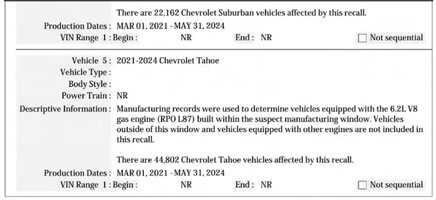
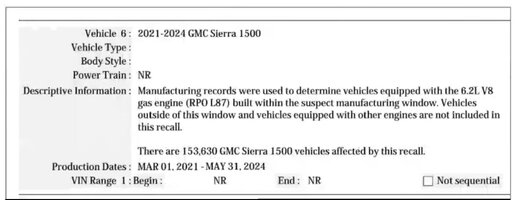
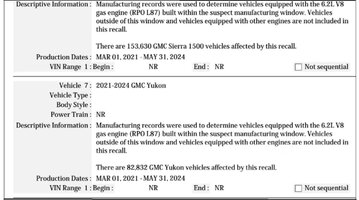
GM Recalls Nearly 1M Vehicles (Catastrophic Engine Failure) Are YOU affected?
- Thread starter mrrsm
- Start date


I have the super reliable diesel 3.0L so I'm not affected. This is worse than all the problems with DOD/AFM/DFM. I can see a lawsuit coming in the near future as the "fix" doesn't fix anything.
How can the quality of GM engines have gone down so badly in the last 20 years? Oh yeah, DOD/AFM! Maybe they're just banking on their previous reputation and now working a new rep of being worse than Ford! I'm definitely hanging on to my Sierra till the doors fall off.
How can the quality of GM engines have gone down so badly in the last 20 years? Oh yeah, DOD/AFM! Maybe they're just banking on their previous reputation and now working a new rep of being worse than Ford! I'm definitely hanging on to my Sierra till the doors fall off.

GM has always had problems with technology. GM has been toying around with AFM/DOD since 1981 (6.0 Cadillac Big Block), and still cant get it right. OHC would solve a lot of the AFM/DOD problems. But GM cant even get that right.
Ford has been running OHC on every single mass produced engine since what, 1997?
Dodge has been running OHC on every single V6, and I think I4, motor since 2012, only not doing it in the Hemi, which is no longer being made. And Fiat/Dodge/Jeep/Chrysler is rated the worst auto manufacture in the WORLD!
Toyota/Lexus since the 80's
Nissan/Infinity since the 70's
Benz since the 60's.
Kia/Hyundai since the 00's (If not earlier, like the 80's)
Im not putting Audi/VW or BMW on this list. Any vehicle you have to replace rod and main bearings as part of routine maintenance doesn't deserve anyone's time or money.
Chevy... Nope, lets continue using the same technology that we have been using since the 60's on our V8's.
In all reality, I cant blame them. There is a reason that the early (1999-2006) LS engine are rated one of the most reliable engines ever mass produced (with a few exceptions like the LH6).
I cant think of a single good GM OHC engine... EVER. The Z06 Vette engine from 92 wasnt even a GM (Lotus). The GM 2.0 and 2.0 Turbo from the 80/90's had head gasket issues.... Now that I think about it, every single 4cyl engine that was OHC from GM had head gasket issues (except the Atlas 2.7, and the 2.7 TurboMax), or turbo issues. The 3.6 is rated one of the worst engines ever mass produced. The last good GM V6 was the 60* 3.5 engine that was built for 3 years (2005-2007), and the 3800 although it had its own share of issues.
I mean come on GM...
My boss just bought a Silvy with the L87 that is affected by the recall. They currently dont have a solution, and GM is only replacing engines that have already failed, with a backlog of 3-20 months! (depending on region). Its to the point in some areas that GM is just buying the truck back for sticker.
Edit: Just adding another opinion here, the 2.7 Turbomax looks strangely like a 2.7 Atlas with a Turbo.
Ford has been running OHC on every single mass produced engine since what, 1997?
Dodge has been running OHC on every single V6, and I think I4, motor since 2012, only not doing it in the Hemi, which is no longer being made. And Fiat/Dodge/Jeep/Chrysler is rated the worst auto manufacture in the WORLD!
Toyota/Lexus since the 80's
Nissan/Infinity since the 70's
Benz since the 60's.
Kia/Hyundai since the 00's (If not earlier, like the 80's)
Im not putting Audi/VW or BMW on this list. Any vehicle you have to replace rod and main bearings as part of routine maintenance doesn't deserve anyone's time or money.
Chevy... Nope, lets continue using the same technology that we have been using since the 60's on our V8's.
In all reality, I cant blame them. There is a reason that the early (1999-2006) LS engine are rated one of the most reliable engines ever mass produced (with a few exceptions like the LH6).
I cant think of a single good GM OHC engine... EVER. The Z06 Vette engine from 92 wasnt even a GM (Lotus). The GM 2.0 and 2.0 Turbo from the 80/90's had head gasket issues.... Now that I think about it, every single 4cyl engine that was OHC from GM had head gasket issues (except the Atlas 2.7, and the 2.7 TurboMax), or turbo issues. The 3.6 is rated one of the worst engines ever mass produced. The last good GM V6 was the 60* 3.5 engine that was built for 3 years (2005-2007), and the 3800 although it had its own share of issues.
I mean come on GM...
My boss just bought a Silvy with the L87 that is affected by the recall. They currently dont have a solution, and GM is only replacing engines that have already failed, with a backlog of 3-20 months! (depending on region). Its to the point in some areas that GM is just buying the truck back for sticker.
Edit: Just adding another opinion here, the 2.7 Turbomax looks strangely like a 2.7 Atlas with a Turbo.
Last edited:
Some more info on the recall and reasons for the failures:

Ahem, have you forgotten about the 4.2 LL8, which is used more than the V8's in the GMT 360/370, has very good reliability. Sure there have been failures but nowhere near any of these newer engines. It's not perfect, no engine is, but I have never been left on the side of the road walking. But I forgive you since you've never owned one.I cant think of a single good GM OHC engine... EVER.

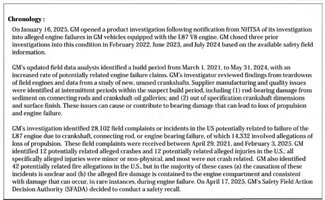
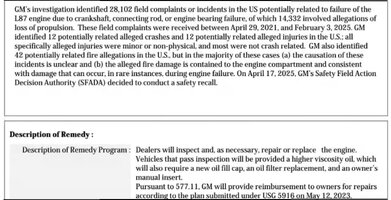
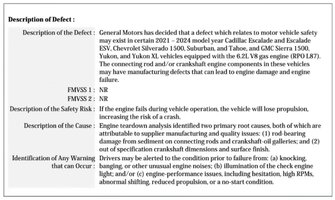
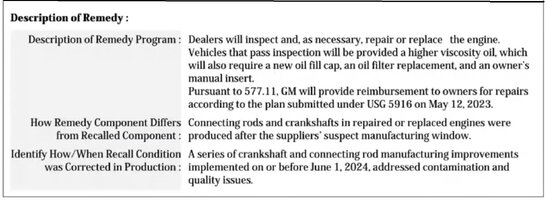
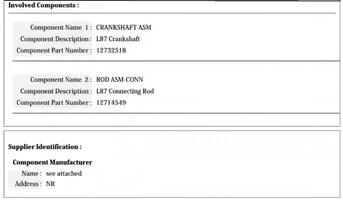
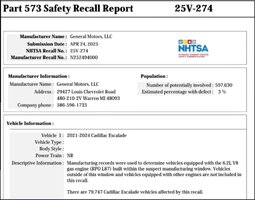
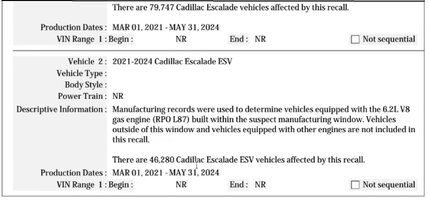
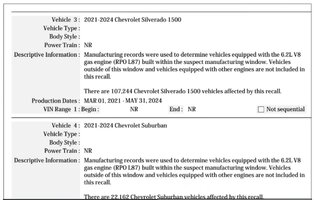
And here's the Motor Oil Geek explaining why GM is now specifying 0w40 in these engines instead of the watery 0w20:
My LM2 3.0L Duramax also uses 0w20 and wish I could go to 0w40, especially in summer, but I'm still under the drivetrain warranty and it specifies a DexosD certified oil. But then there hasn't been any, AFAIK, lower end failures of these engines. Looking at the list of DexosD certified oils, there are three 5W30 certified oils. The MOBIL SUPER 3000 FORMULA DD 5W-30 seems to be sold only outside of North America so basically in warmer climates. And reading the descriptions for these oils, they are actually Dexos2 certified so they are really just regular oil that they are making oil makers pay for the certification even though it's already certified. Dexos2 and DexosD are basically the same.
My LM2 3.0L Duramax also uses 0w20 and wish I could go to 0w40, especially in summer, but I'm still under the drivetrain warranty and it specifies a DexosD certified oil. But then there hasn't been any, AFAIK, lower end failures of these engines. Looking at the list of DexosD certified oils, there are three 5W30 certified oils. The MOBIL SUPER 3000 FORMULA DD 5W-30 seems to be sold only outside of North America so basically in warmer climates. And reading the descriptions for these oils, they are actually Dexos2 certified so they are really just regular oil that they are making oil makers pay for the certification even though it's already certified. Dexos2 and DexosD are basically the same.
Last edited:

Lake Speed Jr. got me to change over my oil preference from Mobil 1 to Valvoline Restore and Protect. I have actually had a couple conversations, on his personal cell and via texting, about another oil sample analysis matter. The video @Mooseman references is very informative, no doubt.And here's the Motor Oil Geek explaining why GM is now specifying 0w40 in these engines instead of the watery 0w20:
My LM2 3.0L Duramax also uses 0w20 and wish I could go to 0w40, especially in summer, but I'm still under the drivetrain warranty and it specifies a DexosD certified oil. But then there hasn't been any, AFAIK, lower end failures of these engines. Looking at the list of DexosD certified oils, there are three 5W30 certified oils. The MOBIL SUPER 3000 FORMULA DD 5W-30 seems to be sold only outside of North America so basically in warmer climates. And reading the descriptions for these oils, they are actually Dexos2 certified so they are really just regular oil that they are making oil makers pay for the certification even though it's already certified. Dexos2 and DexosD are basically the same.
I am wondering just how many GM owners will get rid of their GM's after all this and buy elsewhere. This engine problem has been going on for a long time and GM turned a blind eye to the problem. Plus, trying to get rid of an engine recall truck, will not be easy. Thankfully my GM herd are of the GMT800 series group.
I know that when I bought my 2021, I did not want a gas V8 with all their DOD/AFM/DFM BS, even if they are easily defeatable. What did surprise me was actual bottom end failures with these. I know I remember when the first 4.2L rolled out they had cylinder liners drop out but they fixed those quick. Just the whole industry as a whole has been going down in quality, even the mighty Toyota has been having engine issues.
I hate to say it but ever since the pandemic, quality has been going to the shitter. I don't think this is a design flaw but a quality check issue, pure and simple. If I were forced to buy another new truck, it would probably be the same as my current Sierra with the 3.0L Duramax even though the newer crop (LZ0) has a DEF drinking problem while towing. I haven't heard of a single serious issue with these except for the 10 speed tranny, which is a whole other story. I'm keeping my Sierra until the wheels or body fall off.
I hate to say it but ever since the pandemic, quality has been going to the shitter. I don't think this is a design flaw but a quality check issue, pure and simple. If I were forced to buy another new truck, it would probably be the same as my current Sierra with the 3.0L Duramax even though the newer crop (LZ0) has a DEF drinking problem while towing. I haven't heard of a single serious issue with these except for the 10 speed tranny, which is a whole other story. I'm keeping my Sierra until the wheels or body fall off.
My opinion is quite a bit different. Planned obsolescence thru intentional market downsizing, with intentional inferior parts use.Just the whole industry as a whole has been going down in quality, even the mighty Toyota has been having engine issues.
My 2 local GM dealers, one is a Chevy/Buick/GMC, and the other one is a GMC/Buick/Isuzu, near me literally have no new consumer grade cars or trucks on the lot. They have a TON of commercial grade (Government White) trucks thou.
The Dodge/Chrysler dealer cant sell a new vehicle to save its life.
The Ford dealer also cant sell a new vehicle to save its life.
Their lots are full of new vehicles.
GM lots are empty.
GM only wants to sell you a vehicle that has to be orderd.


Cost, quality/reliability or features/performance. Pick any two.
That may be true but I think they would have gone way too far with engines blowing up during warranty. I would also believe planned obsolescence as I remember as a kid when a car was finished when it was over 100k miles (back when we were still using the imperial systemMy opinion is quite a bit different. Planned obsolescence thru intentional market downsizing, with intentional inferior parts use.
) and nowadays vehicles lasting 2x or 3x longer and 100k miles is now considered low.Quite a bit different here. The GM dealership I worked at last year was flush with new cars and trucks and couldn`t sell them. And from what I can see now in my other local dealerships, all brands, they have lots of stock so ??? GM Canada may have a different policy or the dealers are able to keep a sizable floor plan. I certainly saw that they had a hard time moving stock and was running out of lot space. I constantly see lots of advertising for discounts, cash backs, .99% or even 0% financing.My 2 local GM dealers, one is a Chevy/Buick/GMC, and the other one is a GMC/Buick/Isuzu, near me literally have no new consumer grade cars or trucks on the lot. They have a TON of commercial grade (Government White) trucks thou.
I got my 2021 when there was 0 stock. I lucked out and found it after the guy that ordered it cancelled but was already built and showing in their stock, but not on site, waiting for chips. I also got it at .99% financing for 6 years. Put my deposit in June, didn't come in until late Sept. 2021. Lot was still empty.
The way things are going, I'm lucky that mine has been relatively trouble free (knock on
 ).
).
This is what happens when Auto Builders allow too many "Engineers" into the Meetings and influence the Plan Of Action for the "Next, Best Thing" and throw as many Modules and Gee-Gaws into these Machines as those Yo-Yos can dream up in a CAD Program.
Even though it was my Wife that spotted my Blue 2000 Chevrolet Long Bed Silverado GMT800 sitting in a Nissan Service Lot at the EXACT Moment I was looking at it at home on The Internet... She asked me later on, "Bobby... Isn't this Truck a Bit Too Old and Out Dated Now...?"
I explained that since it was well under Eight Grand and in damned near PERFECT Running Condition with the LM7 5.3L LS Motor only having around 73K (this was back in 2018) that I would NOT be interested in anything having "More Doors, More Modules and More Over-Engineered Complications..."
Besides all of those issues comes the ability to use my Tech 2 and Snap-On Scan Tools and a variety of Oscilloscopes to "Keep An Eye On It..." and NOT be Held Hostage to all of the impossible "Steeplechase" maneuvers that the More Modern Trucks and Cars have to "Dealership" with.
You Watch... Just like @MAY03LT recently suggested... in paraphrase... "There will be a Resurrection of the GMT360s coming ..." as soon as people realize that unless their Floor Pans and Support Frames have Rust-Rotted away... Nobody ever built a Better SUV than the Trailblazers and Envoys...
Even though it was my Wife that spotted my Blue 2000 Chevrolet Long Bed Silverado GMT800 sitting in a Nissan Service Lot at the EXACT Moment I was looking at it at home on The Internet... She asked me later on, "Bobby... Isn't this Truck a Bit Too Old and Out Dated Now...?"
I explained that since it was well under Eight Grand and in damned near PERFECT Running Condition with the LM7 5.3L LS Motor only having around 73K (this was back in 2018) that I would NOT be interested in anything having "More Doors, More Modules and More Over-Engineered Complications..."
Besides all of those issues comes the ability to use my Tech 2 and Snap-On Scan Tools and a variety of Oscilloscopes to "Keep An Eye On It..." and NOT be Held Hostage to all of the impossible "Steeplechase" maneuvers that the More Modern Trucks and Cars have to "Dealership" with.
You Watch... Just like @MAY03LT recently suggested... in paraphrase... "There will be a Resurrection of the GMT360s coming ..." as soon as people realize that unless their Floor Pans and Support Frames have Rust-Rotted away... Nobody ever built a Better SUV than the Trailblazers and Envoys...
Last edited:
Were it that simple. Automotive companies do not make money by selling the best or most reliable vehicles, they make money by selling *new* vehicles. Speaking as an engineer with 40 years experience in high tech product development & manufacturing, these issues are the predictable consequence of the never-ending dance between marketing (seeking to better differentiate their products), engineering (seeking to build cooler, whizzier products), finance (seeking to build cheaper products), & executive management (seeking to sell more products). Add in compounding factors like tightened emissions requirements and a consumer that has been trained to live his life on a treadmill and the end result comes as no surprise.This is what happens when Auto Builders allow too many "Engineers" into the Meetings and influence the Plan Of Action for the "Next, Best Thing" and throw as many Modules and Gee-Gaws into these Machines as those Yo-Yos can dream up in a CAD Program.
Great tear down video on a L87 by I Do Cars. Some very interesting observations by a GM Tech in the comments that should scare the crap out of anyone!
WILL ALL GM 6.2 L87's FAIL? This one did at under 50K! Not Under Warranty? FULL ENGINE TEARDOWN!
WILL ALL GM 6.2 L87's FAIL? This one did at under 50K! Not Under Warranty? FULL ENGINE TEARDOWN!
Here's a teardown of one of the actual recalled engines. Wow. No holes in the block or broken rods but the failure is just unreal. Somebody was asleep either at the drafting table or the build plant. Wow!
Here is another YT Contributor whose White Board Technical Break Downs are ALWAYS worth grabbing by ALL Journeyman (and Women) Mechanics. THIS is the Touchy (Oily) Topic that has brought this terrible issue to light regarding the Catastrophic Failure of the L87 GM 6.2L Motors and what might just turn out to be their Saving Grace: Thicker Viscosity Motor Oil:
PS...
Ever notice the difference between how quickly you can stir a Spoon in a Glass of Water versus Trying to Stir up Honey in a Jar? The operative feature here is VISCOSITY...but More To The Point... Molecular Friction causes you to EXPEND MORE ENERGY PER STIR.
The whole premise of using THINNER MOTOR OIL may have something to do with the following issues:
(1) Small Oil Port Holes and Apertures being much too small in Camshaft Phasers and Oilers.
(2) Excessive Oil Molecule Adhesion under Low Temperatures and under High Mechanical Stress can cause a Failure to Lubricate and under certain conditions, allow Bubbles and Cavitation to form that are COMPRESSIBLE and accidentally cause drops in Oil Pressure within the Fluid Column of Gerotor and Gear Driven Oil Pumps. Even momentary drops and loss of Oil Pressure can affect Bearing Wear.
(3) ... but more than likely...it also has to do with Thicker Oils SCAVENGING MUCH MORE HORSEPOWER necessary to easily keep moving parts moving along with an adequate film of lubrication and not having way too much inter-part *Stickiness*.
The Trade Off is that while Thicker Motor Oils allow for better lubrication (up to a point) ...as the Oil Barrier heats up and thins down .. But they STILL requires MUCH MORE FUEL to keep so many moving parts... easily moving together under Thicker Lubrication.
PS...
Ever notice the difference between how quickly you can stir a Spoon in a Glass of Water versus Trying to Stir up Honey in a Jar? The operative feature here is VISCOSITY...but More To The Point... Molecular Friction causes you to EXPEND MORE ENERGY PER STIR.
The whole premise of using THINNER MOTOR OIL may have something to do with the following issues:
(1) Small Oil Port Holes and Apertures being much too small in Camshaft Phasers and Oilers.
(2) Excessive Oil Molecule Adhesion under Low Temperatures and under High Mechanical Stress can cause a Failure to Lubricate and under certain conditions, allow Bubbles and Cavitation to form that are COMPRESSIBLE and accidentally cause drops in Oil Pressure within the Fluid Column of Gerotor and Gear Driven Oil Pumps. Even momentary drops and loss of Oil Pressure can affect Bearing Wear.
(3) ... but more than likely...it also has to do with Thicker Oils SCAVENGING MUCH MORE HORSEPOWER necessary to easily keep moving parts moving along with an adequate film of lubrication and not having way too much inter-part *Stickiness*.
The Trade Off is that while Thicker Motor Oils allow for better lubrication (up to a point) ...as the Oil Barrier heats up and thins down .. But they STILL requires MUCH MORE FUEL to keep so many moving parts... easily moving together under Thicker Lubrication.
Last edited:
Moving to the higher weight oil is a patch, it does not address two fundamental, root cause problems.
Problem #1: The L87 appears to have substantially narrower margins of tolerance for oil viscosity and main/rod surface finish (i.e. as designed & produced it runs much closer to its intrinsic limits, thereby increasing risk of failure).
Problem #2: Crank supplier performance & capabilities notwithstanding, GM's supplier management & incoming QA/QC processes allowed marginal or out-of-spec material to be accepted for an extended period of time (not weeks or months, but years).
One more thing: blaming EPA CAFE mandates driving lower viscosity oils is a red herring. GM is responsible for developing & releasing what increasingly looks like a marginal design and then failing to properly ensure adequate process controls were in place & operating as required.
Problem #1: The L87 appears to have substantially narrower margins of tolerance for oil viscosity and main/rod surface finish (i.e. as designed & produced it runs much closer to its intrinsic limits, thereby increasing risk of failure).
Problem #2: Crank supplier performance & capabilities notwithstanding, GM's supplier management & incoming QA/QC processes allowed marginal or out-of-spec material to be accepted for an extended period of time (not weeks or months, but years).
One more thing: blaming EPA CAFE mandates driving lower viscosity oils is a red herring. GM is responsible for developing & releasing what increasingly looks like a marginal design and then failing to properly ensure adequate process controls were in place & operating as required.

colddeadhands61
Member
…and this is why I still have my 26 year old K1500 Suburban. 350, never say die Vortec engine.
It just sucks that GM is such a s**t show these days.
It just sucks that GM is such a s**t show these days.
paintdobber
Member
05 Evnvoy XL 4.2 Atlas, 260000 miles and still a daily work truck. Back seats removed and packed with construction tools.drive train seals have began to fail servicing them now. The only issue I have is thinking something is wrong because the only check engine light I seem to get is an evap code . Gas cap has been the fault every time. I keep waiting for the light coming on. This anxiety comes from a 99 Tahoe from helloooooh not again, what the hello is it this time.Some more info on the recall and reasons for the failures:
Ahem, have you forgotten about the 4.2 LL8, which is used more than the V8's in the GMT 360/370, has very good reliability. Sure there have been failures but nowhere near any of these newer engines. It's not perfect, no engine is, but I have never been left on the side of the road walking. But I forgive you since you've never owned one.
This might seem off topic, but I'm just chiming in that I agree that the last 10 years of new cars has been a s*** show.
Here's what's transpired in my corner of the universe because of the s*** show ...
I'm basically not a GM kind of guy, but after keeping up with maintenance on mom's Trailblazer for these past few years, I came to appreciate that GM is good at some things. Or used to be.
Just got new bumper skins, grill, and headlights for mom's TB
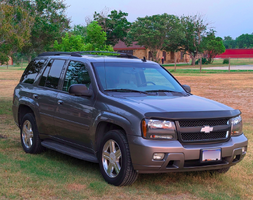
But back to my recently found appreciation for GM. I picked both of these up recently, in separate cash deals. Both are garage kept, extremely clean, everything works, vehicles. The suburban with 160k and the yukon with 103k, miles on the odometer. Current plans are to replace all fluids, so starting to work on that.
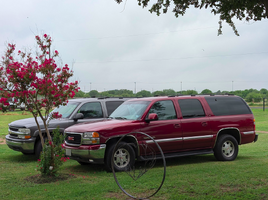
I think most new cars now, and over the last few years are overpriced fails. There are a few exceptions, but nothing is "reasonably priced" in my opinion. The last new vehicle I bought was in 2000. I thought 2025 I might buy a new one. Then I decided "nah".
Here's what's transpired in my corner of the universe because of the s*** show ...
I'm basically not a GM kind of guy, but after keeping up with maintenance on mom's Trailblazer for these past few years, I came to appreciate that GM is good at some things. Or used to be.
Just got new bumper skins, grill, and headlights for mom's TB
But back to my recently found appreciation for GM. I picked both of these up recently, in separate cash deals. Both are garage kept, extremely clean, everything works, vehicles. The suburban with 160k and the yukon with 103k, miles on the odometer. Current plans are to replace all fluids, so starting to work on that.
I think most new cars now, and over the last few years are overpriced fails. There are a few exceptions, but nothing is "reasonably priced" in my opinion. The last new vehicle I bought was in 2000. I thought 2025 I might buy a new one. Then I decided "nah".
Last edited:
colddeadhands61
Member
Pontiac built an OHV inline 6 back in the 60's. I saw a video on it saying GM corporate killed it because it was "too" good.GM has always had problems with technology. GM has been toying around with AFM/DOD since 1981 (6.0 Cadillac Big Block), and still cant get it right. OHC would solve a lot of the AFM/DOD problems. But GM cant even get that right.
Ford has been running OHC on every single mass produced engine since what, 1997?
Dodge has been running OHC on every single V6, and I think I4, motor since 2012, only not doing it in the Hemi, which is no longer being made. And Fiat/Dodge/Jeep/Chrysler is rated the worst auto manufacture in the WORLD!
Toyota/Lexus since the 80's
Nissan/Infinity since the 70's
Benz since the 60's.
Kia/Hyundai since the 00's (If not earlier, like the 80's)
Im not putting Audi/VW or BMW on this list. Any vehicle you have to replace rod and main bearings as part of routine maintenance doesn't deserve anyone's time or money.
Chevy... Nope, lets continue using the same technology that we have been using since the 60's on our V8's.
In all reality, I cant blame them. There is a reason that the early (1999-2006) LS engine are rated one of the most reliable engines ever mass produced (with a few exceptions like the LH6).
I cant think of a single good GM OHC engine... EVER. The Z06 Vette engine from 92 wasnt even a GM (Lotus). The GM 2.0 and 2.0 Turbo from the 80/90's had head gasket issues.... Now that I think about it, every single 4cyl engine that was OHC from GM had head gasket issues (except the Atlas 2.7, and the 2.7 TurboMax), or turbo issues. The 3.6 is rated one of the worst engines ever mass produced. The last good GM V6 was the 60* 3.5 engine that was built for 3 years (2005-2007), and the 3800 although it had its own share of issues.
I mean come on GM...
My boss just bought a Silvy with the L87 that is affected by the recall. They currently dont have a solution, and GM is only replacing engines that have already failed, with a backlog of 3-20 months! (depending on region). Its to the point in some areas that GM is just buying the truck back for sticker.
Edit: Just adding another opinion here, the 2.7 Turbomax looks strangely like a 2.7 Atlas with a Turbo.
IIRC, they were being used in racing. Drag strip ? I think, and was beating V8 Chevy's.
This is exactly why I buy older GM's, and now Toyotas.. I really like this little 2005 Highlander... Except for the timing belt.And we all (most of us) remember the Vega aluminum block fiasco. Good idea, bad execution. Engineers aren't the brightest sometimes.
Yep. I think it's directly related to increasing profits and lowering costs and quality. Look at the 10 speed tranny fiasco. They took a solid ZF designed transmission and cheapened it to the point that Allison are not renewing their licensing agreement with GM. It never was an Allison tranny, just the name badge slapped on the trucks. So much so that Allison is prohibiting any unsold trucks to be sold after July 2026 with their name on it. I think they are actually embarrassed to have their name associated with this piece of junk.
GM is heading down the toilet.
GM is heading down the toilet.
